





Shopping Bag


Life’s top three ponderment’s: What is time? What is life? What is your pupillary distance? We can’t speak for life or time, but we sure can help you find your pupillary distance!!!
But what the heck is ‘pupillary distance’ to begin with?! This term typically pops up at your yearly optometry check-in, especially if you’re a prescription wearer. You know, that sheet of paper you’re given after your appointment with your eye specifications. This paper’s your ticket to some b*tchin’ glasses or sunglasses, but if your pupillary distance measurement is MIA, then you’ve got a problem.
You need your PD measurement to find the perfect sunglasses best suited for you, or else you run the risk of lenses and frames that lead to tons of eye strain. Who wants that? Not us, and that’s why we’ve gone ahead and put together this great guide on how to measure your pupillary distance, so you can get some high-quality sunglasses!

Think of pupillary distance (PD) as your face’s unique blueprint. It’s the measurement (in millimeters) between the centers of your pupils, and when you order reading glasses or prescription sunglasses, it is important to have the correct PD. When you get prescription lenses, this number is the GPS that tells the lenses exactly where to sit so the vision correction hits its target. Get it wrong, and the whole optical mission fails!
Sometimes, certain brands use the term far PD or distance PD, but it’s interchangeable with PD, indicating the same measurement. In the case of reading glasses, the term near PD is used, referring to the same kind of measurement but focused on your pupils when you are specifically looking up close at something.
So why does this number matter so much? In order to maintain good eye health, you should be consistent with your prescription, and for your prescription to be most effective, you need precision. Meaning, the lenses should align correctly with your eyes. (Correct PD = crisp vision.) When you don’t do this, you can face problems with distortions and headaches that, if left unchecked, can lead to worsening eyesight. Yikes!
Ultimately, PD impacts so much of your experience in prescription glasses and sunglasses (e.g., clarity, comfort, and overall vision quality). Rather than eyeball it or guestimate, it’s really important to get an accurate PD measurement so you can enjoy the world around you, or risk tripping over sticks and stones.
Measuring pupillary distance is not something you have to go back to your optometrist for; in fact, you can measure it from the comfort of your own couch. You just need the right tools and knowledge.
What you’ll need for measuring pupillary distance:
A ruler that measures in millimeters, which you can get at an online optometry retailer or a neighborhood supply store. Pro tip: It’s unlikely that your PD will change once you’re an adult, so you won’t be doing this every year. Unless you make a hobby out of it.
A mirror, so you can see what you’re doing. A bathroom mirror should be fine. Or, if you’d like extra help, you can always phone a buddy.
Good lighting for accuracy. You need to be able to see your pupils so you can mark the ruler accurately.
Now you’re ready to unlock the secret to measuring pupillary distance!

Got all your tools? You’re ready to rock ‘n’ roll!!! Those perfect prescription sunglasses are so close you can practically already see them on you.
Let’s get to measuring:
Step 1: Stand about 8–10 inches from a mirror, close enough that you can clearly see the ruler numbers. If you have a friend, make sure they are the same distance from you and make sure they are able to be level with the ruler so they can read it easily.
Step 2: Hold the ruler across your brow line, just above your pupils. Don’t let it wiggle.
Step 3: Close your right eye and line up the "0" mark on the ruler directly with the center of your left pupil.
Step 4: Open your right eye and close the left eye. Without moving the ruler, look at what number aligns with the center of your right pupil. That number (in millimeters) is your PD.
Step 5: Jot down that number. Then, do it again if you’d like to confirm accuracy, or you wiggled a smidge. If the numbers match, mission accomplished!
When measuring your pupillary distance, mistakes can happen. The scientists at goodr HQ have already face-planted through every PD measuring blunder. Learn from our failures:
Don’t tilt your head or move the ruler during measurement. A millimeter is such a small unit of measurement; it’s important you keep everything level and statue-still so your PD is not miles off. If you’re unsure of your movements, this would be a good time to get a friend to help you with this.
Don’t take measurements in poor lighting. That’s like trying to hit a bullseye in the dark. Eep. Get good lighting, and for the love of visions, measure twice if you have to.
Don’t measure too far from the mirror or helper. You have to be able to see the number you’re jotting down, or you’ll end up with a wonky fit.
Now that you’ve got your pupillary distance down, you’re ready to drop your Rx into any of our prescription sunglasses. Our prescription sunglasses are powered by Lensabl, so you get a flawless fit and razor-sharp vision, guaranteed.
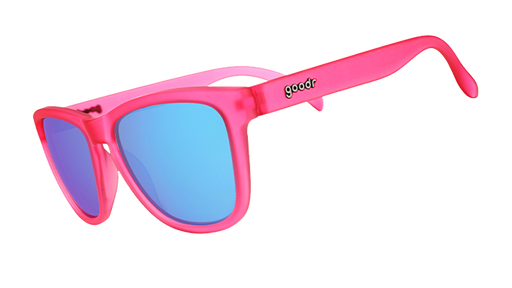
With your PD in hand, the world is basically your style oyster. Get classic with timeless tortoise frames, Bosley’s Basset Hound Dreams, or Nine Dollar Pour Over. Or make a statement with pink Flamingo Couture and the equally striking white Iced by Yetis.
Still haven’t measured? What are you waiting for?! Grab those rulers, call a friend, make it a PD party. Friends who measure together, see clearly together.
Take your eye game up a notch with a new case to keep your prescription sunglasses or glasses in mint condition. Your sunnies work hard for you, so why not give ‘em a lil love back!
THE SUNNIES THAT STARTED IT ALL
THE STORY BEHIND THE SHADES


